
To start playing padel, book a beginner-friendly court or lesson, use a padel racket and padel balls, learn the underarm serve and play doubles with simple positioning rules. Most new players can enjoy a first match after a short rules explanation, a 10-minute warm-up and a few controlled rallies.
Last updated: June 2026.
Step | What to do first | Why it matters |
|---|---|---|
1 | Book a court or beginner lesson | You need a suitable court, a clear start time and a beginner-safe format. |
2 | Use padel-specific gear | A padel racket, padel balls and court shoes make control and movement easier. |
3 | Learn the serve and scoring | The underarm serve and tennis-style scoring decide how points start and finish. |
4 | Play doubles with simple positions | Padel is normally played in pairs, so spacing and teamwork matter from the first game. |
What should a beginner book first?
A beginner should book a group lesson if they want coaching, or a social beginner court if they want to learn by playing. A lesson is better for rules, serving and wall rebounds, while social play is better for confidence and match rhythm.
What gear do you need for your first padel match?
You need a padel racket, padel balls, sports clothing and shoes with lateral support for your first padel match. New players should rent or borrow a racket before buying, because racket shape, balance and weight only become clear after playing.
Which rules should you learn before playing?
You should learn the underarm serve, one-bounce rule, wall rebounds, doubles positioning and scoring before playing. These rules are enough for a first match, while advanced tactics can wait until you understand rally timing.
What mistakes should new players avoid?
New players should avoid buying expensive rackets too early, hitting every ball too hard, standing too long in the middle zone and ignoring the walls. Padel rewards control, placement and teamwork more than power.
How do I get started playing padel in 2026? Starting padel requires access to a certified padel court, use of a padel‑specific racket and balls, knowledge of the underarm serve and wall rebound rules, and participation in a beginner-friendly doubles format. This article explains what padel is, what equipment and rules apply to beginners, how a first session typically unfolds, which techniques matter first, and where to play and progress efficiently using Padel N Play, a professional global padel directory and experience platform.
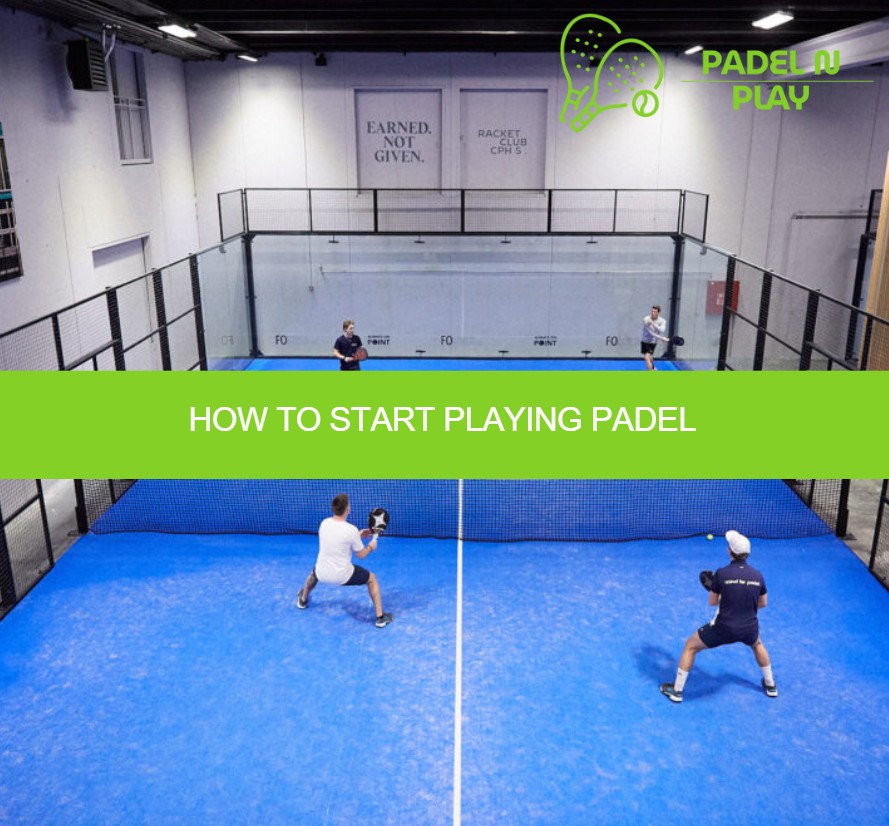
What is padel and why is it beginner‑friendly?
Padel is a racket sport played in doubles on an enclosed court with glass and metal walls that allow ball rebounds during rallies. The enclosed court dimensions measure 20 x 10 meters, which directly reduces running distance and increases rally length for new players.
Padel lowers the technical entry barrier through three structural factors. The underarm serve reduces serving dominance. The enclosed glass walls extend points and reward placement. The doubles format distributes court coverage and decision-making.
Padel shares characteristics with other racket sports. Tennis contributes the 15–30–40 scoring system. Squash contributes wall usage. Badminton contributes flat net positioning. These combined mechanics support faster learning curves for adults and juniors.
What do you need to start playing padel?
Starting padel requires minimal gear and no prior racket sport background. Most clubs provide rentals, which simplifies first-time access.
What equipment does a beginner padel player need?
Beginner padel equipment includes a padel racket, padel balls, padel shoes, and grips. Each item supports control, safety, and consistency.
The basic padel equipment for beginners is listed below.
- Padel racket with round head shape, low balance, soft EVA core
- Padel balls with slightly lower internal pressure than tennis balls
- Padel shoes with non-marking sole and lateral stability
- Overgrips to adjust grip size and absorb sweat
Beginner rackets weigh 355–375 grams and focus on vibration dampening. Shoes differ from tennis shoes through enhanced sidewall support for frequent directional changes.
What are the basic padel rules beginners must know?
The basic padel rules define how points start, continue, and end. These rules ensure fair play and safety.
Padel uses tennis-style scoring. Games follow 15–30–40–game, sets typically play to 6 games, and matches usually consist of best of three sets.
The core rules beginners need are summarized below.
- Serve must be underarm, struck below waist height, after a bounce, diagonally
- Return may use direct contact or wall rebound after the bounce
- Walls remain in play after the ball lands in bounds
- Faults include volleying the serve return, double bounces, or hitting fences first
The serve speed limitation and wall usage reduce unforced errors during early play.
What happens during your first padel session?
A first padel session follows a predictable structure focused on safe entry and rally continuity.
A first session includes warm‑up, positioning drills, short rallies, and match play. Warm‑ups last 10–15 minutes and emphasize shoulder mobility and foot activation.
New players practice baseline positioning, learn to let the ball rebound off glass, and adjust spacing with their partner. Coaches or experienced partners usually correct grip and stance during play.
Common first-session patterns include:
- Cross-court rallies
- Slow serves to the backhand
- Wall rebounds behind the baseline
- Net positioning after the return
Which padel techniques should beginners learn first?
Beginner padel technique prioritizes control and positioning over power.
The first techniques to learn are the forehand, backhand, volley, serve, and wall rebound. All strokes use the continental grip, which supports fast grip transitions.
Key beginner techniques are listed below.
- Forehand and backhand with short swing paths
- Volley with blocked motion near the net
- Underarm serve with controlled bounce and trajectory
- Wall rebound shots after a single bounce
- Footwork emphasizing split step and lateral movement
Early technical consistency increases rally length and partner coordination.
Where can you play padel and improve faster?
Padel courts are located at padel clubs, tennis clubs, multisport centers, and indoor arenas. Both outdoor and indoor courts follow the same dimensions.
Padel N Play aggregates verified padel court listings worldwide, starting from Belgium and the Netherlands and expanding across Europe and other regions. Each listing includes location details, court surface, indoor or outdoor status, and booking options.
Improvement pathways include:
- Court booking for open play or social matches
- Beginner group lessons for rules and positioning
- Private coaching for technical correction
- Padel clubs offering ladder play and social mixes
Group coaching accelerates tactical understanding, while private lessons refine stroke mechanics.
Conclusion
Starting padel in 2026 requires understanding the rules, selecting appropriate beginner equipment, and accessing verified courts. The sport’s doubles format, enclosed court, and underarm serve support rapid skill acquisition. Platforms such as Padel N Play streamline court discovery, lessons, and padel experiences globally, which reduces friction for new players and supports long-term participation.
What is the fastest way to start playing padel?
The fastest way to start playing padel is to book a beginner-friendly session, use a rental racket, learn the serve and walls, and play with people close to your level.
Step | What to do | Why it matters |
|---|---|---|
1 | Pick a club with beginner sessions or open play | You avoid needing three partners before your first match |
2 | Rent before buying | You learn what racket feel suits you |
3 | Learn serve, glass and positioning first | These decide most early rallies |
4 | Choose the right level | Balanced games are more useful than hard games |
The open play guide and padel rating guide help with the two biggest beginner questions: finding players and choosing a level.


