
Padel will be one of the fastest-growing racket sports in Europe and globally by 2026, played by over 30 million people in more than 130 countries. It is a mix of tennis and squash, played on a smaller enclosed court measuring 10 by 20 meters, where a ball can bounce off the glass or metal enclosure to keep the game going. The serve must be hit underhand and below hip height. Padel is loved worldwide for its fast rallies, strategic use of walls, and accessibility. In this article, you will discover everything about padel: from rules, court dimensions, equipment, and scoring to the emergence of professional circuits such as the World Padel Tour, its spread in the US and Europe, how to get started, and where to find a padel court near you via platforms such as Padel N Play.
What is padel?
Padel is a racket sport combining rules and features from both tennis and squash. It is primarily played as doubles on a 20 meter x 10 meter enclosed court with walls that are used in active play. The ball must bounce once on the court before contacting any wall, and underhand serves are required. The scoring system mirrors that of tennis: 15, 30, 40, deuce, and advantage.
How does padel differ from tennis?
Padel differs from tennis in court size, racket design, the use of walls for rebound play, and the underhand serve.

What are the key features unique to padel?
- Solid racket without strings
- Smaller ball with lower pressure than tennis balls
- Glass and metal walls are part of play
- Doubles only format in official competitions
What is the origin of padel?
Padel was invented in 1969 in Acapulco, Mexico by Enrique Corcuera, who adapted a walled court for casual tennis-like games. It spread to Spain and Argentina in the 1970s and 1980s before exploding globally in the 2000s.
Read more about history of padel: origins, evolution and globaal rise
How big is a padel court?
A standard padel court measures 20 meters in length and 10 meters in width. The court is enclosed with glass walls at the back and on the sides, typically up to 3 or 4 meters high.
What are the typical court materials?
- Glass walls on the back and parts of the sides
- Mesh fencing or metal grates along upper side sections
- Artificial turf flooring is common for optimizing bounce
Is there a single or doubles court?
Official padel is always played on doubles-sized courts. Singles courts (6x20m) exist but are rarely used and mostly seen in private settings.
How is padel played?
Padel is played in doubles format with underhand serving, wall rebounding, and strategic positioning. Each rally begins with an underhand serve that must land diagonally in the service box after bouncing once and hitting below the waist.

What are the basic padel rules?
- Serve below the waist after one bounce
- Ball must bounce once before hitting the back or side wall
- Ball can rebound off the walls and stay in play
- Ball may not hit the wall directly without first bouncing
Read more about padel rules: official scoring, court etiquette en game basics
Do players switch sides?
Yes, players switch sides after every odd game. Like tennis, sets are played up to 6 games with a 2-game win margin.
What is the “golden point” rule?
Some padel tournaments use a golden point rule at deuce (40-40): the receiving team picks which player returns the next serve, and the team that wins the point wins the game.
Read more about how to play padel: tips, techniques en strategies
Which equipment is used in padel?
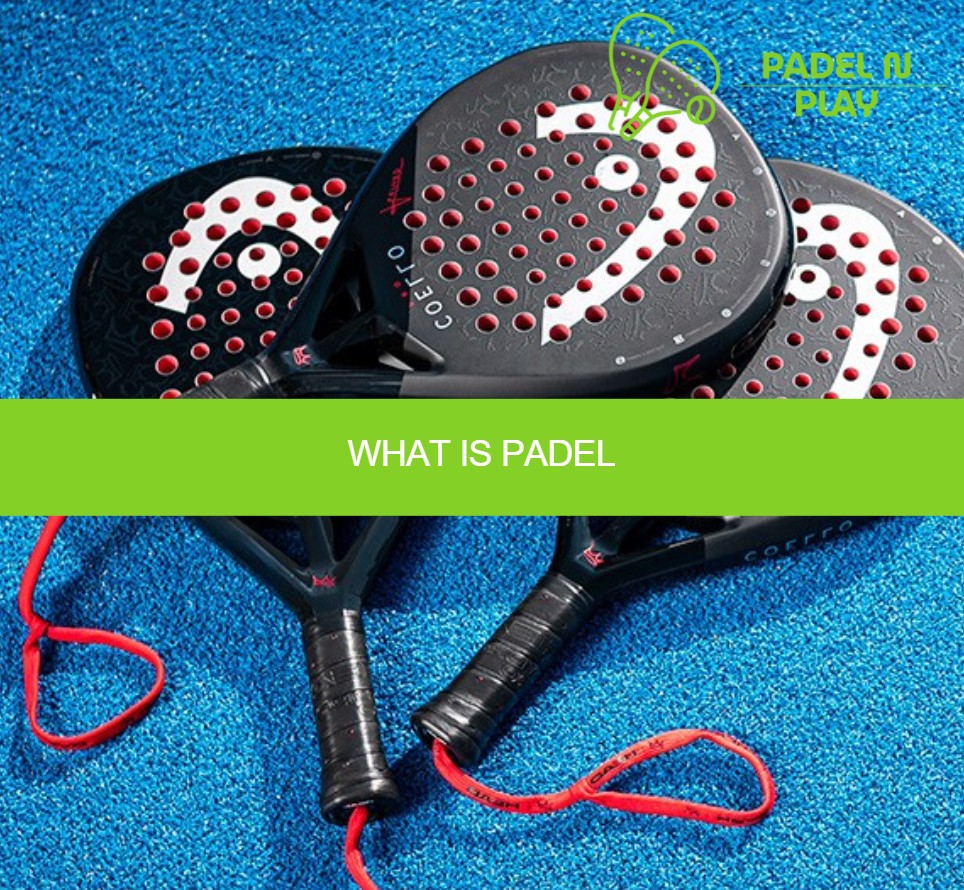
The main equipment required for padel includes a padel racket, padel shoes, and low-compression balls. The racket is solid and perforated, unlike a tennis racket, and lacks strings.
What types of padel rackets exist?
Padel rackets come in three common shapes, each offering different performance characteristics.
Shape | Power | Control | For whom |
|---|---|---|---|
Round | Low | High | Beginners |
Teardrop | Medium | Good balance | Intermediate |
Diamond | High | Low | Advanced players |
Are there specific padel shoes?
Yes, padel shoes have special soles with zigzag (herringbone) grip for traction on turf, as well as reinforced sides for lateral movement.
Read more about padel equipment: rackets, balls, shoes and gear
What is the scoring system in padel?
The scoring system in padel follows the same structure as tennis: 15, 30, 40, deuce, then advantage and game. A standard match is played as the best of 3 sets.
How do you win a set?
A set is won by being the first to reach six games with at least a two-game margin. If the score is 6-6, a tie-break is played to 7 points (with a 2-point margin).
When is a ball considered out?
- If the ball does not bounce before hitting the wall
- If the ball goes outside the glass walls by crossing above the maximum height
- If the ball fails to cross the net or lands outside the boundaries
Read more about how to score points in padel: scoring system, faults and winning strategies
How popular is padel in 2026?
In 2026, padel is played in more than 130 countries with over 30 million active players. It has experienced massive growth, especially in Europe, the UK, and the United States. Organizations like FIP and the World Padel Tour support its international expansion.
What are the demographics of padel players?
Padel appeals to a wide age group. Around 60% of players are men and 40% are women. Youth programs promote early-age engagement.
Where can you play padel?
You can find padel courts via local sport centers or digital platforms like Padel N Play. These platforms offer court availability, location filters, online booking, and often matchmaking services to find partners.
What types of padel facilities are available?
- Indoor padel clubs for year-round play
- Outdoor municipal courts in parks or sports centers
- Private sports complexes with coaching and equipment
Why is padel growing so fast?
Padel grows due to its low entry barrier, social doubles format, short match duration, and low impact on joints. This makes it accessible for all ages and fitness levels, encouraging widespread participation.
Is padel less physically demanding than tennis?
Yes, padel typically requires less lateral sprinting and permits longer rallies due to wall rebounds, making the game more tactical and sustainable for older players.
Is padel becoming a professional sport?
Yes, padel has developed a professional circuit supported by entities such as the World Padel Tour (WPT) and the International Padel Federation (FIP). The Premier Padel tour is another major initiative launched in partnership with Qatar Sports Investments and the International Tennis Federation.
Is padel aiming for Olympic inclusion?
Yes, padel is actively seeking inclusion in future Olympic Games. Its growing federation network and popularity increase the chances of recognition by the IOC.
How do you start playing padel?
To begin with padel, you need a starter paddle, padel shoes, and access to a court. You can book online through apps like Padel N Play or join a local club.
Are there padel lessons for beginners?
Yes, many clubs and platforms offer introductory courses, small group coaching, or 1-on-1 training. Beginner-friendly formats teach serves, court awareness, and basic tactics.
Padel in 2026 is a thriving global racket sport characterized by wall-based gameplay, strategic doubles format, and accessible entry for all levels. With continued growth supported by platforms like Padel N Play and increased visibility through professional tours, padel is evolving from a social sport to a major global discipline. Whether played recreationally or competitively, its fast pace, social nature, and inclusivity make it a standout in the modern sports landscape.