
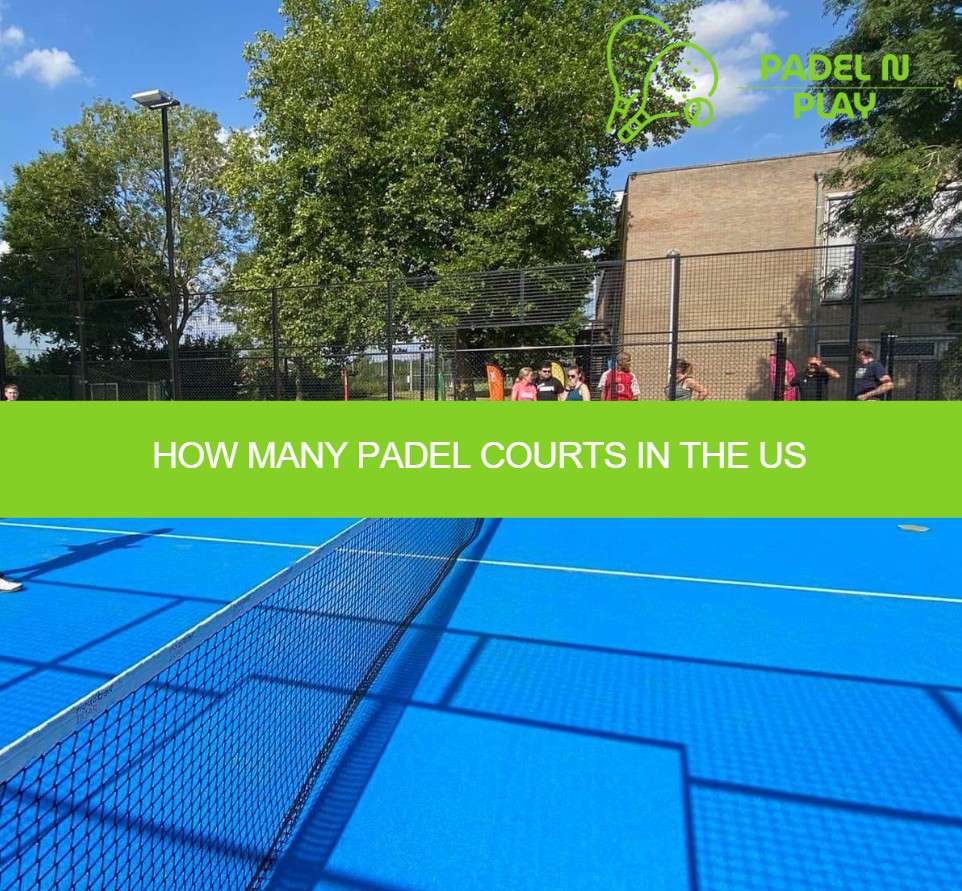
How many padel courts are there in the United States in 2025?
There are more than 650 padel courts across the United States as of 2025. This court count spans 31 states and represents significant infrastructure expansion from just 454 courts in 2023 and fewer than 20 in 2019. The majority of courts are housed within private clubs, athletic facilities, and commercial sport centers.
Which state has the most padel courts?
Florida houses 268 courts, accounting for around 41% of all US padel courts. This dominance is driven by favorable weather, dense urban regions like Miami, and high tourism rates.
How fast has the number of padel courts grown?
The growth rate reached 152% from 2022 to 2023, where the count jumped from 180 courts to 454. In 2024, another 200 courts were established, pushing the 2025 total beyond 650.
How many states currently have padel courts?
Padel courts exist in 31 states. States with substantial growth besides Florida include Texas, California, New York, New Jersey, Illinois, Washington, and Pennsylvania.
What are the most popular states for padel in the US?
The most popular states for padel in the US are Florida, California, Texas, and New York. These states combine high population density, multicultural communities, and year-round playability.
State-by-state padel court distribution
The following overview shows the approximate number of courts by state in 2025.
- Florida: 268+ courts
- California: 65+ courts
- Texas: 55+ courts
- New York: 30+ courts
- Illinois: 20+ courts
Urban growth clusters
Major urban regions with concentrated padel expansion include:
- Miami, FL
- Los Angeles, CA
- New York City, NY
- Chicago, IL
- Houston, TX
- Charlotte, NC
What has caused the rapid growth of padel in the US?
The rapid growth of padel is powered by a combination of strategic investment, increased player demand, media visibility, and celebrity endorsements. Additional factors include the sport’s low learning curve and high accessibility.
Influence of celebrities and athletes
Prominent athletes such as David Beckham and LeBron James have promoted padel courts in public. This celebrity attention increased interest among younger demographics and investors.
Foreign investment in clubs
International padel franchises from Spain, Sweden, and the Middle East have entered the US market with capital-intensive projects, including European-style padel clubs in states like California and Florida.
Which organizations are leading padel development in the US?
The leading organizations developing US padel infrastructure include the United States Padel Association (USPA), the FIP (International Padel Federation), and private operators like Padel Haus and The Padel Club USA.
Role of the USPA
The USPA is responsible for overseeing certification, tournaments, safety standards, and court accreditation. It also manages player rankings and national event calendars.
FIP’s international framework
The FIP governs padel globally and supports US development through tournament licensing, elite coaching, and international ranking systems.
How does padel’s popularity compare to other racket sports in the US?
Padel is the fastest-growing racket sport in the US. Data from the USPA indicates growth rates that surpass tennis and even pickleball in new club construction over the last 24 months.
Player growth trajectory
From 30,000 players in 2021 to a projected 10 million by 2030, the sport mirrors the early stages of (and outpaces) historical tennis growth in the US.
Club membership participation
New padel-specific clubs report membership megaspikes of 300% year-over-year, especially in coastal and Latin-American-dense regions.
What is the projection for padel courts and players by 2030?
The USPA projects there will be more than 30,000 courts and over 10 million players by 2030, based on current infrastructure investment trends and player engagement rates.
Average growth per year
This would require building approximately 4,850 courts per year between 2025 and 2030, a 46x increase from the 2023 rate.
Where are indoor vs outdoor padel courts more common?
Southern and Western US regions favor outdoor padel courts due to warm climates, while Northern states and urban environments use indoor formats to ensure year-round play.
Indoor market emergence
Cities like New York, Chicago, and Seattle have invested in indoor courts with climate-controlled facilities and LED-lit turf systems.
What demographics are driving padel’s growth?
The core player demographic ranges between ages 20 and 45 with high representation from Latino, European, and young-professional communities across metropolitan areas.
Gender balance in participation
Participation is split approximately 52% male and 48% female. Women’s league participation doubled between 2022 and 2024.
What are Padel N Play and similar platforms doing to connect players?
Padel N Play provides a platform for finding nearby courts, registering for events, and tracking local rankings. It connects players through geospatial club locators and integrated partner-matching features.
Services provided by Padel N Play
- Local court finder by ZIP code
- League registration and tournament browsing
- Real-time booking systems
- Skill-level filters and player matchmaking
How are local businesses and real estate adapting to padel’s growth?
Real estate developers add padel courts to residential and commercial projects to attract clients. Hospitality groups now partner with padel clubs to boost guest experiences and facility utilization.
Examples of commercial padel incorporations
- Hotels in Miami and Palm Springs now offer branded padel courts
- Lifestyle apartment complexes in Austin and Phoenix include padel centers
What challenges does the sport face in US expansion?
Main challenges include limited public awareness, regulation variances, import fees on glass panels, and zoning restrictions. Delays are also created by high construction costs and limited contractor experience in padel-specific builds.
Average construction cost per court
The average cost for a standard panoramic padel court ranges between $50,000 and $90,000. Indoor courts raise overall project costs by 30-50% due to HVAC and lighting needs.
The United States hosts more than 650 padel courts as of early 2025, a rapid expansion driven by urban demand, Latin-American cultural influence, and global investment strategies. Florida, California, Texas, and New York remain key growth centers. With forecasts of 30,000 courts and over 10 million players by 2030, padel is transitioning into a mainstream recreational sport and viable asset class. Platforms like Padel N Play play a central role in organizing, navigating, and sustaining this fast-paced expansion.
